Exploring the Kingdoms of Game of Thrones in Detail


Intro
In the vast and intricate world of Game of Thrones, the kingdoms of Westeros serve not only as geographical boundaries but also as the backdrop for rich narratives, political intrigue, and character developments that resonate with viewers around the globe. Each territory—North, South, East, and West—boasts its unique cultures, histories, and ruling dynasties, forming a tapestry that adds layers to the overarching saga crafted by George R.R. Martin. This deep dive into the kingdoms examines not just their histories and distinctions but the intricate dynamics that drive the storylines forward.
Imagine standing atop the Wall in the North, where icy winds howl and the remnants of old magic linger. Or picture yourself in the sun-soaked gardens of Dorne, where intrigue thrives amid the beautiful landscapes. This article aims to unravel the multifaceted nature of each kingdom, delving into their political structures, significant events, and the memorable characters that shaped their fate.
By exploring the various territories, readers will gain an understanding of how power moves in Westeros, the significance of allegiances and betrayals, and how the complex histories of these kingdoms set the stage for the epic struggles depicted in the series.
The journey we take through the kingdoms will highlight how they influence not only the fates of their own inhabitants but also the destinies of those beyond their borders, revealing a world that is as perilous as it is captivating.
The Seven Kingdoms of Westeros
The Seven Kingdoms of Westeros serve as the backdrop for the complex narratives that unfold throughout the Game of Thrones series. They are not just mere territories; each kingdom has a distinct history, set of values, and political dynamics that significantly shape the story arcs of the characters. Understanding these kingdoms is essential for grasping the intricate web of alliances, rivalries, and the socio-political landscape that drives the plot forward.
Throughout this article, we will explore each kingdom's unique role within the realm of Westeros. By focusing on their origins and cultural significances, readers can appreciate how these realms contribute to the tumultuous events that arise. It also sheds light on the enduring themes of power struggles and the impact of legacy, which resonate deeply with fans and provide insight into the creators' narrative choices.
The Origin of the Seven Kingdoms
The Seven Kingdoms didn't always exist as an entity. Historically, they were independent realms until they were united under the Targaryen rule, notably by Aegon the Conqueror. This unification not only settled various conflicts among the factions but also established a dynasty that would endure for generations.
Originally, the territories included in the Seven Kingdoms were more than just kingdoms; they had their distinct customs and rulers. Each had its own conflicts and dynamics, from the fierce independence of the North to the political maneuverings in the Reach. When Aegon and his sisters, Visenya and Rhaenys, descended upon Westeros with their dragons, they not only brought fire and blood but also a new vision for unity.
The notion of seven kingdoms, however, is a bit of a misnomer. In reality, the regions are often counted differently, and there are technically nine regions if one includes the lands beyond the Wall and in the Iron Islands. Yet, it is the symbolism of the Seven that persists, acting as a narrative shorthand for the literary themes of the series.
"When the snows fall and the white winds blow, the lone wolf dies, but the pack survives."
This quote emphasizes the necessity of unity, reflecting the very essence of the kingdoms' origins.
Geographic Overview
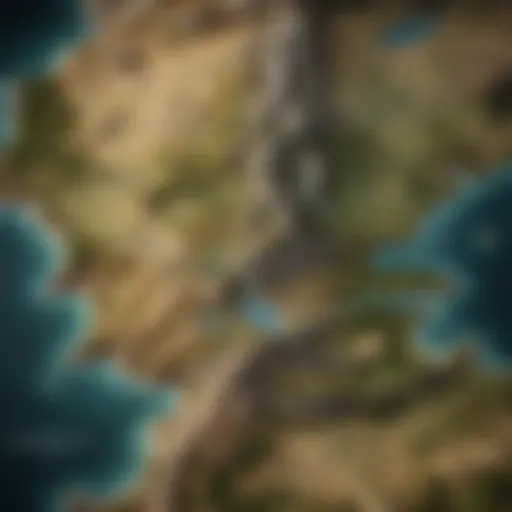
The Seven Kingdoms cover a diverse landscape, ranging from the tundra of the North to the sunny hills of Dorne. Each area contributes to the cultural differences that make the kingdoms distinctive. This geographic diversity is crucial when examining the type of governance, economy, and military strategies employed by each kingdom.
- The North: Vast, cold, and often harsh, the North is characterized by its loyal and resilient people. Its geography includes forests, mountains, and the sea, creating natural defenses that foster a sense of isolation.
- The Vale: Known for its towering mountains and impregnable castle, the Eyrie, the Vale's geography is as much a part of its identity as its noble lineage.
- The Riverlands: Lush and fertile, the Riverlands are a vital area for trade and agriculture. The interconnected rivers provide numerous transportation lines, making it a strategic heart of the kingdoms.
- The Westerlands: Rich with gold mines, this region under House Lannister's control showcases how geography directly impacts wealth and power.
- The Reach: Known for its agriculture, this verdant territory supports the largest population and is often a ground for political alliances.
- Dorne: With its hot climate and distinct customs, Dorne stands apart culturally and politically from the other kingdoms, showcasing the vast differences woven into the fabric of Westerosi society.
- The Stormlands: Rugged and often tempestuous, the Stormlands pose natural challenges while nurturing formidable warriors.
- The Crownlands: As the seat of the Iron Throne, its geography symbolizes political power, with King’s Landing being a hub of intrigue and ambition.
- The Iron Islands: Harsh weather and rocky shores define the Iron Islands’ culture, reflecting their seafaring life and the brutal ways of House Greyjoy.
Understanding this geographical milieu is invaluable in grasping how the natural world influences human actions and interactions across Westeros, setting the stage for the unfolding saga.
Each kingdom is more than just land; it embodies the ideals and struggles of its people, their history, and their fate in the larger context of the Game of Thrones narrative.
The North
The North stands as both a geographical and cultural bastion within the tapestry of Westeros. It occupies the largest expanse of land of all the kingdoms, characterized by its rugged terrain, icy winters, and the steadfast resolve of its people. As we explore this domain, one can't help but grasp its significance not just as a backdrop, but as a fundamental player in the overarching narrative of power, loyalty, and survival. The North is steeped in tradition, embodying the values of honor and resilience, especially in its unwavering support for House Stark.
Cultural Significance
The culture of the North runs deep, marked by its own codes and customs that speak volumes about its inhabitants. The phrase "Winter is Coming" serves not just as a warning of the harsh winters ahead, but as a reminder of the need for preparedness and solidarity. Amidst this raw landscape, strong bonds of family and loyalty define interactions within the region. Here are some cultural hallmarks that encapsulate life in the North:
- Strong Ties to Nature: Oftentimes, the Northmen's way of life is dictated by the cycles of nature, from harvest times in the brief summer to winter's chilling embrace.
- Familial Loyalty: Family honor weighs heavily on the actions and decisions of Northmen. Betrayal is a grave sin, while loyalty is celebrated.
- Traditions of Hospitality: Despite their hardened lives, Northerners value hospitality, a trait exemplified in the ways they treat their guests, reflecting a code that can be traced back to their ancestral roots.
As the region shoulders the burden of unforgiving winters, there emerges a sense of camaraderie among its people, revealing a culture built on resilience in the face of adversity. This spirit captures the essence of the North and informs its response to outside threats and internal challenges.
House Stark and Its Legacy
House Stark holds dominion over the North, symbolizing not only the region's authority but also its enduring values. Known for their motto—"The Starks are known for their unwavering sense of honor. Their legacy embodies the idea that dignity and respect are paramount, regardless of circumstance.
House Stark's historical significance can be seen through their long-standing alliances and conflicts, especially during critical moments such as the War of the Five Kings. A few key points highlight the legacy of House Stark:
- Loyalty to the Old Gods: The Starks, unlike many other houses in Westeros, adhere to the old gods, reflecting the North's distinct spiritual heritage.
- Defenders of Justice: Throughout their storied history, the Starks often served as protectors of the realm, standing against injustice and tyranny, a theme that resonates heavily in the narratives of the series.
- Influence of Key Figures: From Eddard Stark's moral compass to Daenerys Targaryen's unfamiliarity with Northern values, Stark influence reverberates through pivotal events, cementing their role as central characters in the saga.
"The North remembers."
This phrase encapsulates the haunting realities of vengeance and loyalty that shape the Stark legacy, reminding us that history is never truly buried in the frozen earth.
Indeed, the legacy of House Stark transcends mere political power; it reshapes the values and narratives ingrained in the culture of the North. Through exploring their influence, one gains insight into the delicate balance of loyalty, honor, and survival that defines this kingdom of ice and fire.
The Vale
The Vale, often overshadowed by its more populous neighbors, holds a unique place in the intricate landscape of Westeros. Nestled high in the rugged mountains, it is primarily known for its natural defenses and isolated beauty. This geographical seclusion has not only shaped the culture of the Vale but also its political significance throughout the tumultuous history of the Seven Kingdoms.
Geographical Features
The Vale stands as a fortress against the outside world, characterized by steep cliffs, narrow passes, and lush valleys. It is bordered by the towering Mountains of the Moon to the north, providing a formidable barrier to invaders and ensuring a relatively safe haven for its inhabitants. The capital, the Eyrie, is perched dramatically atop a mountain peak, making it nearly impregnable. This strategic positioning influences not just military tactics but also the daily lives of its residents.
Major rivers, like the River Arryn, snake through the Vale, nourishing both the land and the communities that rely on agriculture. The fertile lower regions are often dotted with castles and farms, illustrating a blend of nature and human settlement. The Vale is also known for its unique flora and fauna, some of which do not exist elsewhere in Westeros, further enhancing its allure and mystery.
In addition, weather patterns, with harsh winters and temperate summers, dictate the rhythm of life here. The Vale tends to produce hearty crops and livestock capable of enduring the rigors of its climate, showcasing the resilience of its people.
"The Vale is more than just a geographical entity; it embodies the ideals of isolation, fortitude, and survival, mirroring the very essence of its ruling house."
House Arryn's Role
House Arryn, one of the oldest families in Westeros, wields significant influence within the Vale, embodying its spirit and traditions. The loyalty of the Vale's people to their house is palpable, built upon centuries of steadfast leadership. They serve not just as rulers but as protectors of the realm, holding the Vale's autonomy close to heart.
The late Lord Jon Arryn played a pivotal role in setting the stage for the War of the Five Kings, especially through his connections with other noble families. His sudden death serves as a catalyst, igniting political machinations that ripple throughout Westeros. The Arryns' lineage stems from Aegon the Conqueror’s time, solidifying their claim and importance in the greater narrative.
House Arryn’s motto, "As High as Honor," reflects their aspirations for integrity and fairness. The family's historical alliances, well-illustrated through marriages and partnerships, showcase not just righteous governance, but also a strategic mindset. They understand that the Vale's isolation can also be a double-edged sword. Embracing alliances with families like the Starks and supporting the Targaryens in times of need illustrate their adaptability and foresight in navigating complex political landscapes.
In addition, House Arryn’s involvement in the Night's Watch reflects their commitment to safeguarding the realm against threats from beyond. This level of responsibility underscores their role as a quintessential house, deeply entrenched in the fabric of Westerosi politics.
Through its physical landscape and the ruling House’s decisive role, the Vale stands out in Game of Thrones as a region shaped by both nature and legacy, showcasing the intricate balance of power, culture, and survival in a tumultuous world.
The Riverlands
The Riverlands, often considered the heart of Westeros, play a vital role in the geopolitical landscape of the Seven Kingdoms. This region is not only strategically located but also culturally rich, making it a focal point for the power struggles that permeate the narrative of Game of Thrones. As a crossroads of trade and military engagement, the Riverlands serve as the perfect backdrop for conflicts that define the series. The rivers that snake through the land, most notably the Trident, contribute to its agricultural prosperity while also presenting military advantages and vulnerabilities.
Strategic Importance
The Riverlands hold a unique position within Westeros, bridging the gap between the North and the South. Its numerous waterways have cultivated connections that extend far and wide, ensuring that it is often at the center of significant military campaigns. In fact, its geographical layout made it a natural conduit for the transport of troops, resources, and information across the realm.
- Transport Route: The Riverlands, with its intricate network of rivers, allowed for swift movement of armies during the War of the Five Kings. Generally regarded as a logistical lifeline, the waterway provided the means for major characters to execute their plans.
- Key Locations: Houses with strongholds in this territory, like Riverrun and Harrenhal, have repeatedly emerged as critical player in the shifting dynamics of power.
- Contested Lands: Due to its attractiveness for various factions, the Riverlands have seen frequent allegiances shift. This region has witnessed some of the most intense battles in the series, and its contested nature complicates the already tangled web of alliances and enmities.
House Tully's Influence
House Tully, with their ancestral seat at Riverrun, stands as the dominant household in the Riverlands, encapsulating the region’s essence. Their motto, "Family, Duty, Honor," not only reflects their values but also grounds them in their role throughout the series.
The Tullys introduce critical themes of familial loyalty and betrayal that resonate deeply across the narrative arcs involving various houses, reinforcing the notion that much of the conflict in Game of Thrones stems from personal ties.
- Political Maneuvering: The Tully family’s strategy often involved forging alliances through marriage and diplomacy, bringing both stability and an array of complications to their reign. Such actions influenced the broader political landscape significantly.
- Decline and Struggles: As the War of the Five Kings unfolded, House Tully faced grave challenges that threatened their very existence. Their struggle extends beyond mere survival; it resonates with themes of legacy and the harsh realities of war. This decline shifts the balance of power in the Riverlands and Westores, symbolizing the broader chaos enveloping the kingdoms.
"In the Riverlands, the currents of water often mirror the currents of power, swift, unpredictable, and fraught with hidden dangers."
House Tully's legacy, filled with both triumphs and tribulations, highlights the Riverlands' essential role as a microcosm of the broader themes in Game of Thrones. Their influence is seen not just in their geographic reign, but in the turbulent alliances and betrayals that shape the fate of the entire realm.
Through the lens of strategic importance and the poignant legacy of House Tully, the Riverlands emerge as a compelling tapestry of humanity's political intricacies, serving as a crucial element in understanding the universe crafted by George R.R. Martin.
The Westerlands
The Westerlands stand out among the kingdoms of Westeros due to their immense wealth, strategic significance, and the impactful presence of House Lannister. This region is often described as the backbone of the realm, providing the resources that fuel much of the political maneuvers across the Seven Kingdoms. With its rich mines, particularly the famed gold mines, the Westerlands have been the financial powerhouse that has often allowed the Lannisters to wield enormous influence over the Iron Throne and other noble houses.
Economic Resources
The economic prosperity of the Westerlands predominantly hinges on its natural wealth. The Lannisters, who hold dominion over this region, have enriched themselves through the abundant gold found in their mines. What is often overlooked is the diverse range of resources that the Westerlands exploit.
- Gold and Silver: The primary cash cows for the Lannisters, allowing them to fund wars and bribe allies. These precious metals have not only boosted their wealth but also their political alliances.
- Agricultural Products: While renowned for its mines, the Westerlands is also fertile, producing high-quality wines and grains. This agricultural output supports both local populations and trade with other kingdoms.
- Trade Routes: The geography, with coastlines and access to rivers, provides routes crucial for trade. Merchants travel these routes, further bolstering the economy.
The wealth generated here has caused both esteem and resentment among other houses. For instance, the phrase "A Lannister always pays his debts" highlights their financial clout and also suggests the fears their riches incite among others.
House Lannister's Dominance
House Lannister's hold on the Westerlands is akin to a tightly clenched fist; strong and unyielding. The house, one of the oldest and wealthiest in the realm, has played a pivotal role in the larger narrative of Westeros. Known for their gold, they also emphasize the importance of power and cunning.
From Tywin Lannister's shrewd governance to Cersei's tenacity, their influence is unmistakable:
- Political Maneuvering: The Lannisters have mastered the art of politics, often outsmarting rivals through manipulation and strategic marriages. Their ties to the Iron Throne are a testament to their ability to entrench themselves in power.
- Military Power: With wealth comes a formidable military, as they can hire mercenaries and equip their soldiers better than many. Their army has played significant roles in wars and forced the hand of many a would-be usurper.
- Culture of Arrogance: The Lannisters' supremacy has bred a culture of arrogance, often leading to underestimating their opponents. They consider themselves above others, which in some instances might lead to their downfall.
In essence, the Westerlands does not just serve as a geographical location; it embodies the relentless pursuit of power and dominance that House Lannister has come to symbolize.
"The Lannisters have gold, but gold is not always enough. In the game of thrones, wisdom, strength, and cunning can often tip the scales."
Through the continued exploration of the Westerlands, one can appreciate the complex dynamics that arise when power, wealth, and ambition intertwine in the tumultuous fate of Westeros.
For more insight into the intriguing realms of Westeros, consider visiting Wikipedia on Westerlands or dive into discussions on Reddit.
The Reach
The Reach stands as a unique and crucial realm within the world of Westeros, known for its fertile lands and vibrant culture. It is not just a geographical location; it’s a living tapestry of history, politics, and the personal dynamics of its ruling families. The importance of The Reach in this article lies in its distinct characteristics, its contribution to the overall narrative of Game of Thrones, and how it has shaped the political landscape of the series. It’s where ambition, love, and often tragedy unfold within the backdrop of rich fields and bustling cities.
Cultural Flourishing
The culture of The Reach is one of the most sophisticated and rich among the Seven Kingdoms of Westeros. Its inhabitants take pride in their achievements in agriculture, arts, and education. Known as the breadbasket of Westeros, The Reach's lands yield a wealth of crops, which not only nourishes its people but also fuels the economy of the realm. This abundance allows for a flourishing merchant scene in towns like Oldtown, a significant center of learning and trade.
Traditions here are vibrant, marked by various festivals that celebrate the harvest and local lore. The Reach is steeped in a sense of honor and nobility, influenced heavily by its major ruling house, House Tyrell. The Tyrells are emblematic of The Reach's cultural identity; their motto, "Growing Strong," reflects not only their agricultural prowess but also their approach to politics and relationships. They cultivate alliances like one would nurture a delicate plant, often deepening their connections through marriages with other noble houses.
In terms of social customs, it's common for families to enjoy social gatherings that involve music, dance, and storytelling, celebrating legends from their storied past. These gatherings serve as fertile ground for political agreements and alliances, visibly intertwining personal ties and statecraft.
House Tyrell and Its Alliances
House Tyrell serves as the heart of The Reach, typifying its culture and political aims. Founded by the noble line that claims descent from the First Men, the Tyrells have grown their influence through a mix of cunning and charisma. They are characterized by their savvy political maneuvers, leveraging their wealth from the fertile lands of The Reach to secure alliances that bolster their position.
What stands out about House Tyrell is its ability to play both sides in conflicts, often acting as the peacekeepers amid turmoil. Their numerous alliances, often cemented through strategic marriages, have afforded them a powerful position among the noble houses of Westeros. For instance, the union of Margaery Tyrell to King Joffrey Baratheon exemplifies this approach — a move that aimed to elevate their status and influence in the capital while also securing the grip of power within King’s Landing.
However, their alliances aren't merely strategic; they are also deeply rooted in the social fabric of The Reach. Each marriage or bond made reflects a careful consideration of tradition, loyalty, and strength. Within the series, we see that these connections become both lifelines and sources of vulnerability, highlighting how a single misstep can dramatically shift the tides of power.
Dorne
Dorne, the southernmost realm in Westeros, stands out as a land of unique customs, fiery passions, and complex political dynamics. Unlike other kingdoms, Dorne's characteristics are deeply embedded in its arid climate and its people's strong cultural identity. This section will unravel the intricate layers of Dorne, exploring its distinctive features and notable history.
Distinct Customs
Dorne's culture differs markedly from that of other regions. Its customs are shaped by both geography and history, prominently influenced by the harsh climate and the ancient traditions of its people. The sun-kissed landscapes and scorching summers have forged a land where daily life is entwined with resilience and adaptability.
One of the most notable aspects of Dorne is its approach to gender roles. The Dornish practice a level of gender equality that is quite unorthodox in the context of Westeros. Women can inherit titles and wield power, leading to notable figures like Princess Nymeria, the warrior queen who once united the houses of Dorne. This progressive mindset allows women like Oberyn Martell's daughters, known as the Sand Snakes, to act as fearsome warriors and political players. Such customs don’t just distinguish Dorne; they plant the seeds of rebellion and resistance in its culture.
Moreover, Dornish festivals often include elements of sensuality and revelry, making them vibrant and unforgettable. The Dornish Sunspear festival, for instance, celebrates the summer solstice with music, dance, and wine, bringing together people from all walks of life to honor their heritage.
"In Dorne, the heat isn’t the only thing that ignites passions. Their customs burn bright, challenging norms and traditions everywhere else in Westeros."
House Martell's Resistance
House Martell, the ruling family of Dorne, embodies the spirit of defiance and resilience. Their motto, "Unbowed, Unbent, Unbroken," reflects their resistance against oppression and the broader political machinations of the realm. This defiance can be traced back to the ancient days when Dorne stood as a formidable power, successfully fending off invasions from the iron-willed forces of the Lannisters and Baratheons.
The Martells have always fought fiercely to maintain their sovereignty and way of life---qualities even their enemies respect. Their commitment to revenge was exemplified by Oberyn Martell, who sought justice for his sister’s death, reigniting hostilities that had long lain dormant. Dorne’s willingness to hold grudges even decades after perceived injustices underscores the kingdom's fierce pride and determination.
Moreover, this resistance plays a significant role during the War of the Five Kings. Rather than aligning immediately with other factions, House Martell waits, watching for the opportune moment to secure their own interests while bringing others to heel. This strategy showcases Dorne's long-term view in politics, prioritizing their unique objectives above temporary alliances.
In summation, Dorne is more than just a geographical area; it represents a culture rich in tradition, resistance, and identity. The customs and political dynamics found in Dorne offer a captivating contrast to the often stark and rigid realities of other regions in Westeros, making it an essential kingdom to explore in detail.
For more on Dorne and its customs, see: Wikipedia: Dorne and Britannica: Dorne.
The Stormlands
The Stormlands, a kingdom known for its dramatic landscapes and tumultuous weather, play a significant role in understanding the broader narrative of Game of Thrones. This region, primarily characterized by coastal cliffs, rocky terrain, and dense forests, serves not just as a backdrop but also influences the lives and practices of its inhabitants. From the relentless storms that sweep through to the formidable structures built to withstand them, the Stormlands embody resilience.
The political and cultural dynamics of this area are shaped deeply by its geography. Sixty years of stories about House Baratheon, the ruling dynasty from Storm’s End, grace the annals of this kingdom. The land is a testament to the odds the people face—both natural and political—and sets the stage for alliances and enmities that ripple through the fabric of Westeros.
Natural Challenges
The Stormlands are famed for their harsh weather conditions. The landscape is often blanketed in rain, with storms brewing suddenly and without warning. This environmental instability creates both challenges and opportunities for those who reside here. Settlements in the Stormlands have adapted to these conditions, building stout fortresses designed to resist even the fiercest tempest.
- Storm’s End, the ancestral seat of House Baratheon, stands as a prime example of this architectural resilience. Built atop a rocky cliff, it has weathered countless storms and attacks, symbolizing the enduring nature of its inhabitants.
- The unpredictability of the weather also affects the agricultural practices of the region. While the soil is fertile in certain areas, the constant rainfall can lead to flooding, forcing farmers to innovate with crop rotation and drainage techniques.
The battles fought here aren't merely against human foes; Mother Nature presents her own formidable opponent. During heavy rains, travel becomes treacherous. Rivers swell, and cliffside paths are prone to landslides, which complicates matters for armies and traders alike. Soldiers must be ever-vigilant, as the environment can change drastically, turning a sunny day into a fight for survival.
Yet, amid these challenges, the people of the Stormlands have developed a strong sense of unity and resilience. Their lifestyle fosters a culture steeped in adaptability, where hardship breeds tenacity. This unyielding spirit reflects in their traditions and governance, shaping their identity within the Seven Kingdoms.
House Baratheon’s Legacy
House Baratheon, one of the great houses of Westeros, holds a storied legacy within the Stormlands. Established by Oberyn Martell, the clan rose to prominence following Robert’s Rebellion, which ultimately led to Robert Baratheon ascending the Iron Throne. This pivotal moment redefined the political landscape and infused House Baratheon with considerable influence.
- Legacy of Robert Baratheon: His reign, marked by a penchant for feasting and warfare, showcased the volatility of a ruler securing his power. Enormous changes in alliances were made, and the aftereffects of his actions are seen long after his reign.
- Stannis Baratheon, another key figure, embodies the Stormlands' cold pragmatism. His pursuit of legitimacy and determined claim to the throne led to significant conflicts. His strategies, often viewed through a lens of isolation, paint a picture of the internal struggles faced by the Baratheons, echoing the storms of their homeland.
House Baratheon's legacy is intricately connected to the realm’s broader political narratives. The family’s ambitions led to both glory and ruin, illustrating the thin line between power and downfall. Insights into their history reveal how each member's choices shaped the Stormlands and contributed to the conflicts in Game of Thrones.
"The history of House Baratheon is not merely about kings and wars. It's a reflection of the Stormlands—resilient and tempestuous."
The echoes of their rule and the challenges they faced highlight the ongoing themes of power, conflict, and survival that permeate the series. Understanding the complexities of House Baratheon offers fans deeper insight into how this one house, amid the tempestuous conditions of the Stormlands, reflected the struggles and narratives found throughout Game of Thrones.
The Crownlands
The Crownlands serve as a critical focal point in the broad landscape of Westeros, intertwining its political, cultural, and geographical significance. As the seat of royal power, the Crownlands are inextricably linked to the history of the Iron Throne and the Targaryen dynasty. This region, centered around King's Landing, illustrates the complexities and nuances of governance, showcasing the delicate balance of authority, loyalty, and rebellion that defines the realm.
The Heart of Power
King's Landing, as the capital of the Seven Kingdoms, denotes the very heart of political power in Westeros. Its formidable walls and towering structures stand as a testament to the strength and ambition of those who have ruled. Within this bustling city lie the Red Keep and the Iron Throne, both of which symbolize the authority of the monarchy and the constant struggle for power among noble houses.
A striking feature of the Crownlands is how it has been the backdrop for many crucial historical events. From the construction of the Iron Throne by Aegon the Conqueror to the dramatic political maneuvers that have unfolded within its walls, the Crownlands encapsulate the essence of royal intrigue.
Some aspects of the Crownlands that stand out include:
- Diverse Population: The region is home to a mix of commoners, nobles, and those from distant lands, resulting in a vibrant yet often volatile social strata.
- Economic Hub: Proximity to trade routes makes King's Landing an economic powerhouse, with bustling markets that reflect the wealth and power of its ruling class.
- Military Presence: The city is protected by the Kingsguard and boasts a strong military presence, ensuring that the Iron Throne remains safeguarded against internal and external threats.
"Power resides where men believe it resides. It's a trick, a shadow on the wall." – Petyr Baelish
House Targaryen’s Reign
When discussing the Crownlands, it’s imperative to examine the indelible mark left by House Targaryen. The Targaryens, originally from Valyria, established their dominion over Westeros with fire and blood, using their dragons to conquer and unify the kingdoms. Their reign, fraught with drama and conflict, epitomizes both the glories and downfalls associated with absolute power.
During their time, the Crownlands were not just a seat of power but also a flourishing center for the Targaryen culture and tradition. They introduced a unique blend of Valyrian heritage and the customs of Westeros, impacting various aspects like:
- Architecture: The design of the Red Keep reflects Targaryen artistry, featuring elegant stonework and sprawling courtyards.
- Politics: The
The Iron Islands
The Iron Islands, a starkly rugged archipelago off the western coast of Westeros, play an often overlooked yet crucial role in the tapestry of the Seven Kingdoms. Known for their harsh climates and fierce inhabitants, these lands stand as a testament to resilience and the unsparing nature of existence at sea. From this barren ground springs a culture steeped in maritime tradition, piracy, and a distinct brand of governance that reflects the unforgiving environment.
Maritime Culture
The Ironborn pride themselves on their seafaring skills, which drip from their identity like seawater from a net. Sailing the unpredictable waters of the Sunset Sea, they navigate storms and tempests with a stoic determination. The sea isn’t just a mode of travel; it’s a way of life.
Common expressions like "the iron price" underline their values, where plundering is not just accepted but celebrated. Ironborn culture is deeply interconnected with their belief in the Old Way, emphasizing strength and dominance over compassion. They view themselves as the true lords of the sea, and they adhere to a code that rewards the bold and punishes the weak.
Fishermen, traders, and marauders, they have mastered the art of utilizing the sea for their socio-economic benefits. Pillaging has led to wealth for some, while the shackles of poverty are a harsh reality for others. The duality of their culture presents a fascinating juxtaposition—on one hand, there’s an unyielding valor, while on the other, a begrudging vulnerability to the very sea that gives and takes away.
House Greyjoy's Struggles
House Greyjoy, the ruling family of the Iron Islands, encapsulates the trials and tribulations faced by its people. Their motto, "We Do Not Sow," reflects their maritime ethos and dismisses the more traditional agrarian ways of existence. Yet, this ethos has seen House Greyjoy trapped in cycles of conflict that test their fortunes and political clout.
The internal power struggles within their family, particularly between Balon Greyjoy and his children, showcase a household steeped in ambition and rivalry. A notable clash arises when they aim to assert dominance over the islands, leading to misunderstandings and fractured relations. The tension between familial duty and individual ambition creates a veritable powder keg of intrigue and betrayal.
A turning point in their saga comes with the ambitious plan to declare sovereignty and reclaim historic territories, a bold feat met with fierce resistance from other realms. The fallout from these ventures exemplifies the complex balance they must maintain between their ruthless nature and the need for alliances.
"We are Ironborn!"
– A rallying cry, echoing the resolve of House Greyjoy amid their persistent trials.
As House Greyjoy grapples with its identity in a changing landscape, it becomes emblematic of the Iron Islands. They symbolize not just struggle, but also the raw tenacity of a people shaped by the relentless sea and a fierce drive for survival.
In summary, the Iron Islands serve not only as a backdrop but as a catalyst for larger themes in Game of Thrones. The culture of seafaring people and the trials faced by House Greyjoy illustrate the complex interplay between identity, power, and survival in a crumbling political landscape.
The Night's Watch and Beyond
The Night's Watch stands as one of the most pivotal institutions within the realm of Westeros. This brotherhood represents not just a military order, but also a crucial line of defense in the face of looming dangers. Its significance cannot be overstated, as it plays a vital role in maintaining stability and protecting the realm from threats that lie beyond the Wall. The challenges faced by the Night's Watch encapsulate themes of duty, sacrifice, and the eternal struggle between good and evil. Understanding this institution offers deeper insights into the complexities of Westerosi society and its ongoing conflicts.
The Wall’s Role
The Wall is a massive fortification, stretching hundreds of miles along the northern border of the Seven Kingdoms. Built primarily to keep out the White Walkers and other supernatural threats, it serves as a physical reminder of the dark forces that exist beyond the realms of human understanding. Towering ice and stone, the Wall is not just an architectural feat; it embodies hope and despair simultaneously.
Overseeing the Wall is the Night's Watch, whose members forsake all ties to their families and previous lives to take up this solemn oath. They believe in protecting the realm, even at great personal cost. The Wall stands as a testament to the commitment of these brothers, serving as a backdrop to their struggles and growth. As winter approaches, it becomes increasingly pertinent for the Night's Watch to remain vigilant.
"The Wall is the only thing keeping us safe from what lies beyond; without it, we’d be lost in darkness."
The Night’s Watch creates a culture of brotherhood among those who serve. Even the most fearful or cowardly can find purpose within its ranks, a stark contrast to the power struggles found in the other kingdoms. It showcases the nobility in choosing sacrifice over personal ambition, highlighting a clash between personal desires and the greater good.
The Threat Beyond the Wall
Beyond the Wall lies an expanse filled with untamed wilderness and hidden terrors. As winter draws near, the dangers escalate. The most notable threat emerges from the White Walkers, an ancient race that had long been forgotten. Their resurgence signals not only a potential apocalypse for humanity but also a profound existential crisis.
The Night's Watch's responsibility becomes ever more pressing as they must rally the disparate peoples of the North, from the free folk living in the wilderness to the loyal bannermen of the North’s noble houses. This call for unity reveals another layer of their mission, emphasizing the need for solidarity against a common foe.
As individuals leave behind their pasts to join the Watch, they find themselves entangled in a fight that goes far beyond personal grudges or petty politics found in the southern kingdoms. The ancient threat of the White Walkers not only requires physical prowess but also tests the resilience of character. The members of the Night’s Watch must grapple with loyalty, trust, and the harsh realities of survival in a world where darkness often seems insurmountable.
In summary, the Night's Watch, with its rich traditions and formidable challenges, serves as a microcosm of the larger societal struggles faced within Westeros. By embracing the societal role tasked of them, they not only defend the realm but also reflect the complexities of human nature under extreme pressure. Their efforts echo through history—pulsating like the ever-encroaching chill of winter that serves as a constant reminder of what lies ahead.
Political Intrigues
The world of Westeros is a land steeped in political intrigue, an ever-shifting landscape where allegiances are as fickle as the weather. The complexities of the various houses, their ambitions, and the constant quest for power make this a riveting aspect of the story. In this dissecting of political maneuvers, we find that these intrigues are not just a backdrop; they drive character development and plot progression, illustrating the precarious balance of power that exists.
Often, the enthralling betrayal or unexpected alliance lays the groundwork for the next big twist, leaving audiences on the edge of their seats. In a realm where trust is scarce, the consequences of political decisions can send shockwaves throughout the kingdoms. The intricacies of these relationships enhance our understanding of the motivations behind characters' actions and decisions, crafting a narrative that is rich in depth and nuance.
The Game of Thrones
The phrase "Game of Thrones" itself encapsulates this intense struggle for dominance among the various factions. Each house enters the game with its own sets of rules, strategies, and often hidden agendas. The Lannisters, for instance, are notorious for their cunning and wealth, using gold and influence to manipulate others to their advantage, while the Starks embody loyalty and honor, often to their detriment when they face betrayal.
Key events underline the brutal reality of this game:
- The death of King Robert Baratheon initiates a power vacuum, prompting various factions to vie for control.
- The rise of Joffrey Baratheon highlights the instability and chaos that ensues with an unpredictable ruler.
- The regression of House Stark serves as a cautionary tale of how integrity can be exploited.
The beauty of the political intrigue lies not solely in the strategies employed but in the impact these decisions have on the lives of characters. For example, the assassination of Robb Stark at the Red Wedding, a brutal display of betrayal, serves as a stark reminder of the ruthless nature of power games.
Alliances and Betrayals
The shifting sands of loyalty in Westeros create a tumultuous environment where alliances are formed and broken with little hesitation. Characters often find themselves making uneasy pacts to secure their positions or to protect their kin. However, as the narrative unfolds, these fragile alliances can unravel, leading to monumental shifts in power.
Key alliances play crucial roles, like the alliance between the Tyrells and the Lannisters through marriage, which momentarily stabilizes the throne but ultimately degenerates into opportunistic exploitation. On the other hand, the unexpected collaboration between Daenerys Targaryen and Jon Snow marks a critical juncture where ambition overlaps with genuine cause, showcasing how common goals can sometimes outweigh personal rivalries.
Here's where the stakes are raised:
- , often seen as mere strategic tools, harbor complex emotional undercurrents that can influence outcomes.
- The unforgiving nature of betrayals leaves audiences questioning the motives of every character involved.
- Key betrayals, from Theon Greyjoy's treachery against House Stark to Littlefinger's duplicity, serve as cautionary epitomes that demonstrate the risks associated with deep-seated ambition.
Cultural Nuances Across the Kingdoms
The kingdoms of Westeros in Game of Thrones are not merely geographical divisions; they are richly layered cultural landscapes. Each region brings its own traditions, dialects, and societal norms that shape the identity of its inhabitants. Understanding these cultural nuances is essential for grasping the conflicts and alliances that arise throughout the series. Each kingdom has a unique flavor, influencing everything from social interactions to political maneuverings.
The sway of culture plays a vital role in the dynamics among the kingdoms, igniting flames of both camaraderie and conflict. For instance, the dignity of honor in the North often clashes with the shrewd pragmatism found in the South. This disparity provides depth to the narrative, illustrating how cultural identity drives the characters’ motivations and decisions.
Traditions and Conflict
Traditions serve as the bedrock of each kingdom's identity, both uniting its people and sometimes setting them at odds. In the North, the cold winds and harsh winters foster a sense of resilience, giving rise to customs like the practice of honoring the dead through the Stark family’s motto, "The man who passes the sentence should swing the sword." This tradition encapsulates the idea of personal responsibility and justice, commanding respect and loyalty among Northerners.
Conversely, in the Reach, the flowering of agriculture and the quest for power breed a different set of customs. The grand Harvest Festivals celebrate abundance, but hidden jealousy and ambition often bubble under the surface. These traditions may seem peaceful, yet they can lead to fierce rivalries, reflected in House Tyrell's quest for dominance through alliances and strategic marriages.
"Traditions are like glue; they hold people together, but if too much pressure is applied, they can crack or even shatter."
This sentiment rings true across Westeros, where deeply ingrained customs can lead to misunderstandings and conflict, particularly in the context of a kingdom’s values and the choices of its leaders.
Language and Identity
Language serves as a critical marker of identity in the varied landscapes of Westeros. Different kingdoms speak dialects that reveal their histories and cultures. The way a person speaks can betray social status and origin, often serving as a weapon in political clashes. For instance, the way characters from the Vale carry themselves, with their refined diction and courtly manners, often contrasts starkly with the brusque speech of those from the Iron Islands, where unrefined toughness is prized over eloquence.
These linguistic differences deepen the divisions between the realms, illustrating biases that can tip the balance of power. The North’s common vernacular, laced with a certain straightforwardness, emphasizes honesty and forthrightness, while the Shire folk may be more indirect, opting for subtlety when broaching delicate subjects.
In this intricate dance of customs and language, we see that culture is both a source of strength and a catalyst for conflict, forging the paths of destiny for the people of Westeros.
Learn more about the cultural impact in Westeros here.
Explore the nuances of language across the kingdoms.
Join discussions about cultural differences in the series here.
The Impact of the Iron Throne
The Iron Throne stands as the most potent symbol in Game of Thrones, encapsulating the struggle for power, legitimacy, and dominance in Westeros. The very sight of it, forged from the swords of fallen enemies, evokes a sense of greed and ambition in those who dare to approach. More than just a seat of power, the Iron Throne represents the complexities and often brutal realities of rulership and governance across the Seven Kingdoms. This section delves into how this iconic artifact shapes the politics of Westeros, influencing characters, alliances, and the ongoing quests for supremacy.
Symbol of Authority
The Iron Throne functions as an undeniable symbol of authority, dictating the fate of entire kingdoms with its mere presence. To sit upon it is to claim the right to rule, but the throne is not just about physical dominance; it is steeped in history and tradition. The act of claiming the Iron Throne sends a message, both to the subjects and other claimants. It signifies not only that one has the military might or cunning to seize it, but also that one possesses the legitimacy to rule.
- Historical Context: Historical figures like Aegon the Conqueror used the Iron Throne to unite the Seven Kingdoms, establishing a legacy interwoven with the fabric of Westeros.
- Political Manipulation: Throughout the series, characters like Cersei Lannister utilize the throne's symbolism to justify their often tyrannical actions, showcasing how power can corrupt and decisions can be rationalized.
- Visual Representation: Its imposing stature and chaotic design reflect the tumultuous quest for power, embodying the very chaos that often accompanies leadership in Westeros.
"The Iron Throne is a seat of knives; those who sit on it often find themselves both in power and in peril."
Legitimacy and Rule
To hold the Iron Throne conveys legitimacy, shaping the very nature of governance in Westeros. However, legitimacy is not simply inherited; it is constantly challenged by rival claims and shifting alliances that can turn the tides of power at any moment.
- Legal Claim vs. Might: In Game of Thrones, those who claim the throne must balance their legal right to rule against their ability to maintain it through force. For instance, Robb Stark's initial legitimacy as King in the North is tied deeply to familial ties and honor, yet his inability to grasp the political complexities leads to ultimately tragic consequences.
- Public Perception: The narrative continually highlights how the perception of legitimacy shapes loyalties. The support of the people can sway significantly based on the ruler's actions and their lineage, making public favor a key element in the foundation of rule.
- Examples of Usurpation: Characters like Stannis Baratheon represent the complexities of legitimacy—his claim is rooted in bloodline, yet challenged by the might of rival houses. This dynamic showcases the precarious nature of legitimacy, reflecting the intricacies of power struggles.
In understanding the impact of the Iron Throne, one cannot overlook its role as a catalyst for both ambition and tragedy. It remains a staple in dissecting the political narratives that unfold in Westeros, deepening audience engagement with the overarching themes of power, legitimacy, and the human condition.
Key Events That Shaped the Kingdoms
The story of Westeros is woven with a plethora of events that have left indelible marks on the landscape and the people within it. Understanding these key events provides essential insights into the motivations and rivalries that ripple through the kingdoms, shaping allegiances and fueling conflicts. Without a grasp of these historical phenomena, one might miss the foundation upon which the drama unfolds. The consequences of battles, betrayals, and alliances ripple through time, influencing the characters and their decisions in profound ways. Here, we focus on three pivotal moments that stand out in the chronicles of the Seven Kingdoms.
War of the Five Kings
The War of the Five Kings represents one of the most frenzied and chaotic periods in the history of Westeros. In the aftermath of King Robert Baratheon's death, the power vacuum was like a shiny apple still hanging from a tree, ripe for the taking. Five prominent figures, each with their claim to the Iron Throne, emerge to contest dominion over the realm. This conflict not only fractures the already tenuous stability of the kingdoms but also sets off a chain reaction of events that shapes the fate of many houses.
- Stannis Baratheon, brother to the late king Robert, believes in the legitimacy of his claim through blood.
- Renly Baratheon, the younger brother, garners popular support through charisma and his pledge to bring change.
- Robb Stark, declared King in the North, seeks justice for his father’s death and the autonomy of the North.
- Joffrey Baratheon, the chosen successor of the throne, reigns with an iron fist backed by the resources of the Lannisters.
- Balon Greyjoy of the Iron Islands aims to reclaim his ancestral power over the seas.
These competing interests lead to the gruesome reality of warfare, marked by shifting alliances and betrayals. Here, battles like those at King's Landing, Oxcross, and The Whispering Woods become central to the narrative, encapsulating themes of honor, ambition, and ruthlessness. Every castle siege and skirmish reveals something about the characters involved, their motivations, and ultimately, the ephemeral nature of power.
The Red Wedding
Among the most shocking and gruesome betrayals in the series is the Red Wedding. It is a masterclass in deception, showcasing how trust can be manipulated to devastating ends. This event transforms the landscape of power within the North and the realm at large.
Held at the Twins under the guise of a joyous union between Edmure Tully and Roslin Frey, the wedding quickly turns bloody as Walder Frey aligns himself with the Lannisters to settle old scores against the Starks. The slayings of Robb Stark, Catelyn Stark, and their bannermen become a turning point not only in the war but also in the hearts of fans and characters alike.
- Trust was violated, showing how fragile coalitions can be in the ruthless world of Westeros.
- The consequential fallout leads to the Stark family's further disintegration, and it cements House Lannister’s power and dominance.
- The Red Wedding reverberates through the narrative, serving as a grim reminder that friendship and loyalty can often be mere facades.
"Every man dies, but not every man really lives." This saying captures the essence of the Red Wedding and underscores the high stakes that come with power and loyalty in Westeros.
The Fall of House Targaryen
While currently referring to past events, the fall of House Targaryen acts as a haunting specter over the entire storyline. Once the ruling dynasty of Westeros, the Targaryens fell from grace due to a combination of internal strife, disastrous decisions, and the relentless pursuit of power.
- Aerys II, known as the Mad King, epitomizes the tragic decline of his house. His paranoia and cruelty alienated allies and ignited rebellion.
- The Robert's Rebellion saw him ousted, a conflict fueled by his heinous actions, including the execution of Rickard Stark, which make clear that tyranny breeds opposition.
- The exile of Daenerys and Viserys become a catalyst for their quest to reclaim the throne, highlighting themes of legacy, redemption, and the quest for belonging.
As the story progresses, the remnants of House Targaryen impact other houses and characters, serving as a constant reminder that the past is never truly buried. Their dragons, once feared and revered, now serve as a metaphor for the cyclical nature of power—what rises can fall again.
End: The Legacy of the Kingdoms
The intricate kingdoms of Game of Thrones leave a lasting mark on both the narrative structure of the series and the wider cultural landscape. This conclusion underscores the profound significance of these diverse realms, not just as backdrops for epic battles and political intrigues, but as characters in their own right, each enriching the overall story through their unique histories and identities.
The importance of the kingdoms goes beyond mere geography; they embody the struggles for power, identity, and survival that resonate with viewers and readers alike. Each kingdom reflects different facets of human nature—ambition, honor, betrayal, and resilience. As the series wove together these themes, it invited audiences to explore the complex tapestry of Westeros, compelling them to consider larger questions of morality and governance.
Lasting Influence on Popular Culture
The impact of Game of Thrones on popular culture cannot be overstated. Phrases from the series have wormed their way into everyday conversation, while the iconic imagery of the Iron Throne remains a powerful symbol of authority and conflict. Films, television shows, and even video games have drawn inspiration from Martin's richly developed world, indicating that the kingdoms have transcended their original context.
- Merchandising and Spin-offs: The franchise has expanded through various merchandise, including clothing, board games, and collectibles. Numerous spin-offs are in various stages of production, showcasing a sustained interest in the Westerosi narrative.
- The Fandom: Communities have sprung up around online platforms where fans discuss theories, characters, and plot twists. The engagement remains high on sites like reddit.com and facebook.com, solidifying the relevance of the kingdoms in contemporary discourse.
The ability of these kingdoms to spark discussion and analysis reflects their layered complexity, continuously inviting new interpretations and discoveries.
The Reception of the Series
Game of Thrones faced a rollercoaster reception throughout its run, peaking with critical acclaim and cultural phenomenon status. However, it also left a polarizing legacy, particularly with its final season that sparked substantial debate among fans and critics. The kingdoms that were once adored for their depth and intrigue became focal points for discussions on narrative choices and character arcs.
- Critical Acclaim: Initial seasons received praise for their fidelity to the books, character development, and unpredictable plot twists, which kept audiences on the edge of their seats. Writers and cinematographers were acknowledged for their ambitious storytelling and visual aesthetics, setting a new standard for television productions.
- Controversial Finale: Eventually, responses to the conclusion varied widely. Many fans felt dissatisfied with the resolution of pivotal storylines, particularly regarding character arcs that seemed rushed or unearned. This division has sparked further analysis of writers’ intentions and adaptations of literary works to screen.
Despite the mixed responses, the legacy established by the kingdoms persists. In many ways, the conversations surrounding the series highlight the teachable moments about storytelling and audience expectations.
In essence, the kingdoms of Westeros are far more than mere geographical divisions. They represent the ideas and conflicts that shape narratives, both in fiction and in our understanding of power dynamics in the real world. As we reflect on their legacies, it's clear that these fictional realms will continue to influence generations of storytellers and audiences for years to come.
"The Iron Throne did not merely serve as a seat of power; it became a battleground for ideas and perspectives, forging a legacy that is as multifaceted as the characters that pursued it."
Through examining the significance of the kingdoms and their narrative fates, the conclusion of this article seeks to deepen appreciation for the storytelling craft found within Game of Thrones and the richness of its world.